The Logistics and Industrial Real Estate Opportunity in Kosovo: A Regional Corridor Thesis
Why Kosovo's next decade of real estate value will be built along its highways, economic zones, and trade corridors, not only in its city centres.
Executive Summary
Kosovo's real estate market has been overwhelmingly residential for two decades. According to the Central Bank of Kosovo and independent observers, real estate has absorbed the majority of inbound capital, with manufacturing, construction, and energy following at meaningful but smaller scale. The result is a market with deep liquidity in apartments and very limited institutional-grade product in logistics, warehousing, and light industrial assets.
This imbalance is now a strategic opportunity.
Three structural forces are converging: a completed motorway backbone linking Albania, Kosovo, and North Macedonia into pan-European trade corridors; a broadening free-trade architecture covering the EU, EFTA, CEFTA, Turkey, and the United Kingdom; and a European nearshoring agenda that increasingly favours competitive-cost, EU-adjacent locations. Together, they create the conditions for Kosovo to develop, for the first time, a credible institutional logistics and industrial real estate market.
This Sector Analysis outlines the corridor thesis, the priority sub-asset classes, the locations most likely to capture capital, the risks, and ERAM's positioning.
- The Structural Setup: Why Now
1.1 A Completed Motorway Backbone
Kosovo has, in less than a decade, moved from one of the most poorly connected economies in the Western Balkans to a fully motorway-linked transit corridor.
Route 7 connects Morina on the Albanian border to Prishtina (extending toward Merdare on the Serbian border). It links Kosovo to the Port of Durrës in Albania and, by extension, to Pan-European Corridor VIII.
Route 6 connects Prishtina to Hani i Elezit on the North Macedonian border, and through it to Pan-European Corridor X, which runs from Salzburg through Slovenia, Croatia, Serbia, and North Macedonia to Thessaloniki.
The combined network is toll-free, with 130 km/h motorway speed limits, materially reducing road-freight costs versus comparable Balkan routes.
The strategic implication is significant: a container loaded in Durrës can now reach central Kosovo in a matter of hours, and onward to Skopje, Belgrade, or Thessaloniki within a day. For the first time, Kosovo's geography functions as a connector rather than a constraint.
1.2 A Broadening Free-Trade Architecture
Kosovo's trade access has expanded materially:
SAA with the European Union, providing duty-free access to a market of more than 500 million consumers.
CEFTA membership, with Kosovo chairing the Joint Committee in 2025 as an equal member for the first time.
Free Trade Agreement with EFTA signed in January 2025 (Iceland, Liechtenstein, Norway, Switzerland).
Free Trade Agreement with Turkey and a trade and cooperation agreement with the United Kingdom.
This combination places Kosovo within reach of an aggregated addressable market well in excess of 600 million consumers, on competitive customs terms.
1.3 A Nearshoring Tailwind
European manufacturers and retailers continue to shorten and diversify supply chains, with Eastern and Southeastern Europe absorbing a growing share of relocation decisions. Independent analyses (including the German Economic Team and wiiw FDI research) have repeatedly identified Kosovo's competitive cost structures and EU integration trajectory as material advantages for nearshoring, while flagging that the country has historically captured a disproportionately small share of these flows. The gap between potential and realisation is the investable opportunity.
1.4 A Macro and Tax Setting That Supports Industrial Capex
Flat 10% corporate income tax — the lowest headline rate in the region.
Import of production inputs free of tax and customs duties for the manufacture of export goods.
Commercial lending rates averaging approximately 5.87% (December 2024), the lowest in a decade.
Sovereign credit rating of BB- (first issued in April 2024) — modest in absolute terms, but a meaningful institutional milestone.
For an industrial occupier choosing between Kosovo, North Macedonia, and Albania, the combined fiscal and financing setting is competitive.
- The Demand Side: Who Is Looking, and for What
Demand for logistics and industrial space in Kosovo is currently fragmented across five occupier archetypes:
Domestic distributors and FMCG wholesalers outgrowing legacy warehouses near urban cores and seeking modern, Grade A facilities with adequate clear height (10–12 metres), dock-levellers, and HGV access.
Regional 3PLs (third-party logistics) establishing or expanding Kosovo nodes to serve Albania–Kosovo–North Macedonia cross-border flows.
E-commerce and last-mile operators, where penetration is still low by EU standards but growing at double-digit rates, requiring urban-edge fulfilment facilities.
Light manufacturing occupiers in metals, plastics, food processing, textiles, automotive components, and increasingly green-tech assembly — typically seeking 5,000–25,000 sqm units within economic zones.
Energy-adjacent and construction-materials companies, requiring open-yard storage and heavy-load industrial sites.
The common denominator is a chronic shortage of modern, lender-financeable, ESG-compliant industrial product. The market currently relies heavily on owner-occupied, purpose-built facilities rather than a professional landlord market.
- The Supply Side: Where the Product Will Be Built
3.1 Kosovo's Economic Zones
Under the Law on Economic Zones, Kosovo recognises four formats: industrial parks (heavy industry), business parks (light industry and office), technology parks (R&D), and economic zones (export production). In 2014, three economic zones were formally designated in Mitrovica, Gjakova, and Prizren, with Mitrovica the most advanced in legal and administrative terms. Implementation has been uneven, but the legal framework is in place and aligned with EU and World Customs Organization standards.
3.2 The Five Priority Locations
ERAM's view is that capital and demand will increasingly concentrate in five corridor-anchored locations:
LocationStrategic RoleWhy It MattersPrishtina urban edge (Fushë Kosovë, Lipjan, Obiliq)Last-mile, e-commerce, urban distributionLargest consumer base, intersection of Route 6 and Route 7, airport proximityFerizaj – Hani i Elezit corridor (Route 6 South)Export gateway to North Macedonia and GreeceDirect motorway access to Skopje and Thessaloniki, growing industrial clusterSuhareka – Prizren corridor (Route 6 / Route 7 nodes)Cross-border manufacturing and warehousingProximity to Albanian border, designated economic zone in PrizrenMitrovica industrial beltHeavy industry, metals, processingDesignated economic zone with most advanced administrative statusGjakova – Morina (Route 7 South-West)Albania-facing logistics, Durrës port linkageDesignated economic zone, direct corridor to Adriatic port
In each of these, the development thesis is the same: institutional-grade, build-to-suit or speculative logistics product, energy-efficient, with credible governance and clear exit pathways.
- Product Specification: What "Institutional-Grade" Means in Kosovo
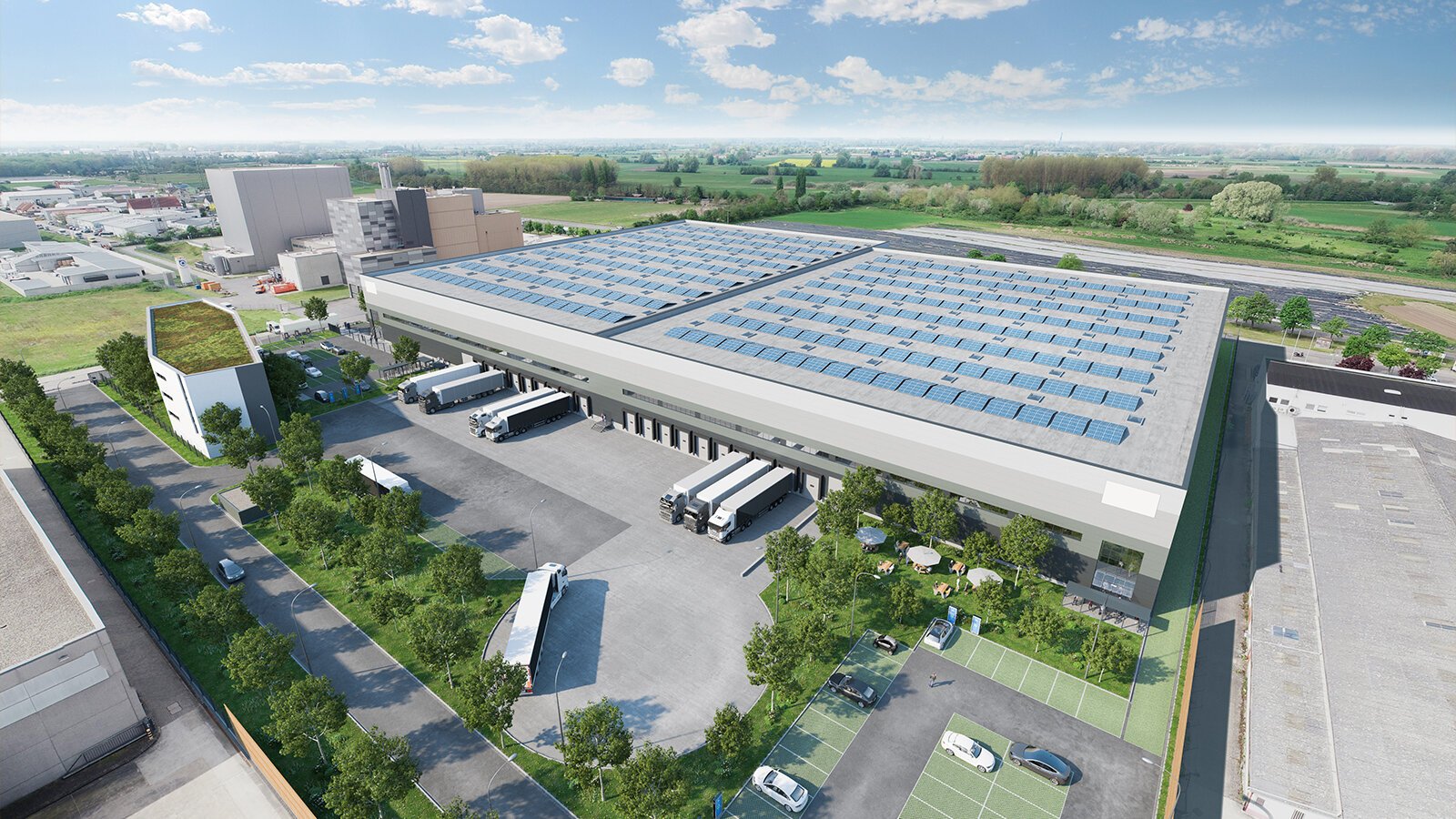
For the Kosovo market to attract institutional capital, the product specification must rise materially above the current vernacular. ERAM's working definition of an institutional-grade logistics asset in Kosovo includes:
Clear height of 10–12 metres minimum (Grade A); 8 metres acceptable only for urban last-mile.
Floor loading of at least 5 t/sqm.
Dock-to-floor ratio appropriate to function (typically 1 dock per 700–1,000 sqm for distribution).
Column grid allowing efficient racking (minimum 12 x 22 metres).
Energy performance: high-quality thermal envelope, LED throughout, BMS-managed HVAC, rooftop solar PV sized to occupier load where possible, EV charging.
Site security to international occupier standards.
Documentation: clean title, formal cadastral registration, environmental permits, occupancy permits, and audited construction records.
Lease structures: triple-net or near-triple-net, indexed to harmonised inflation, with realistic dilapidations and break clauses.
The market premium for true Grade A product — versus the legacy stock — is already visible in rental negotiations and is expected to widen.
- Indicative Economics
The Kosovo logistics market does not yet have a transparent, published yield benchmark. Based on ERAM's market intelligence and triangulation against comparable Western Balkans markets, the indicative parameters for new-build Grade A logistics in 2026 are:
Prime logistics rents: approximately EUR 4.50 – 6.00 / sqm / month (triple-net basis), with upside in well-located, sub-10,000 sqm urban-edge units.
Indicative prime yields: in the 8.0% – 9.5% range, materially above EU averages and reflective of Kosovo's risk premium.
All-in construction cost for Grade A warehouse: approximately EUR 650 – 850 / sqm depending on specification, automation, and ESG features.
Land cost in corridor locations: highly variable; institutional underwriting requires careful, plot-by-plot diligence.
These figures should be treated as directional. Actual transactions will depend on tenant covenant, lease length, ESG specification, and site-specific factors.
- Risks and Watchpoints
A credible sector thesis requires that the risks be stated plainly.
Land assembly and title risk: Industrial-scale sites often require consolidation of multiple parcels. Cadastral inconsistencies and inheritance fragmentation can materially delay projects. Legal diligence is non-negotiable.
Permitting and zoning: Industrial use classifications, environmental approvals, and connection consents (electricity, water, wastewater) can be slow. Early engagement with municipalities is essential.
Grid capacity: Modern logistics assets are energy-intensive (refrigeration, EV charging, automation). Grid reinforcement and rooftop PV with battery storage should be planned in from the design stage, not retrofitted.
Tenant covenant depth: The Kosovo occupier base is shallow relative to mature markets. Underwriting must reflect realistic re-leasing scenarios, not optimistic single-tenant assumptions.
Construction inflation and supply-chain volatility: Steel, concrete, and specialist components remain sensitive to global pricing. Fixed-price EPC contracts with credible contractors are increasingly important.
Macro and political risk: A current account deficit near 10% of GDP, the pace of EU accession-aligned reforms, and regional political dynamics will continue to influence investor sentiment.
AML and source-of-funds scrutiny: Real estate and construction remain identified by Kosovo's FIU as higher-risk sectors. Institutional logistics, with clearly identifiable tenant cashflows and Big-4 auditable structures, is actually part of the solution to this concern, not part of the problem.
- The ERAM Perspective
ERAM's read of the Kosovo logistics and industrial real estate market is structural rather than cyclical. The thesis rests on four convictions.
The motorway and trade-corridor build-out is a one-way change. It permanently reshapes the economics of warehousing and light manufacturing in Kosovo.
The supply of institutional-grade industrial product is materially below latent demand. This gap will not close quickly, creating a multi-year window for disciplined developers.
Capital efficiency, ESG credentials, and lease quality will define winners. The legacy speculative-residential playbook does not transfer to industrial; the discipline required is closer to infrastructure than to apartments.
First-mover institutional development sets the benchmark. Whoever builds the first credible cluster of Grade A logistics assets — with proper documentation, energy performance, and tenant covenants — will define the pricing reference point for the next decade.
ERAM is positioning accordingly: corridor-focused site assembly, build-to-suit partnerships with anchor tenants, and structured vehicles that enable diaspora and institutional investors to participate in industrial real estate on bankable terms.
Final Review
Key Assumptions
Kosovo's motorway network remains fully operational and toll-free through the analysis horizon.
Free-trade agreements (EU SAA, CEFTA, EFTA, Turkey, UK) remain in force and are not materially renegotiated.
Flat corporate tax of 10% and the customs regime for export-oriented production remain unchanged.
Lending rates remain in the 5.5%–6.5% range, with no abrupt monetary tightening.
No major political event materially disrupts investor sentiment or reform credibility.
Missing Inputs (to refine in subsequent ERAM analyses)
A proprietary, transaction-level yield and rent benchmark for Kosovo logistics (currently fragmented; ERAM is building this dataset).
A reliable national inventory of modern (post-2015) Grade A industrial stock.
Updated infrastructure capacity data (grid, water, wastewater) for the five priority corridor locations.
Detailed cost benchmarks for ESG retrofits of legacy industrial assets.
Key Risks
Shallow tenant covenant depth requires conservative underwriting of single-tenant assets.
Permitting, grid connection, and land assembly remain the main execution risks.
Macro vulnerabilities (current account deficit, inflation) and political uncertainty constrain the speed of institutional capital entry.
Reputational and AML scrutiny in real estate broadly demands disciplined governance and source-of-funds transparency in any vehicle.
Next Steps
Forthcoming ERAM Insight (ESG Update category): "The Green Premium in Balkan Real Estate: Pricing the Energy Transition".
Forthcoming ERAM Insight (Market Note category): "Yields, Rents, and Vacancy: A Quarterly Pulse of the Kosovo Property Market".
Forthcoming ERAM Insight (Investor Letter category): "Building Bankable Vehicles for Diaspora and Institutional Capital in Kosovo Real Estate".
Confidential investor briefing on ERAM's logistics and industrial pipeline available to qualified investors on request.
Sources
Central Bank of Kosovo (CBK) — FDI and sector composition data, 2024–2025 releases.
US Department of State — Investment Climate Statement, Kosovo, 2025.
World Bank — Kosovo Country Overview, 2025–2026.
IMF — Kosovo Article IV consultation preliminary findings, 2025.
Kosovo Banking Association (KBA) — Real Estate Market Analysis, 2024 data.
Ministry of Infrastructure of Kosovo — Motorway network information (Route 6, Route 7).
Bechtel-ENKA — Project briefs on Routes 6 and 7 and connection to pan-European corridors VIII and X.
German Economic Team — Policy briefs on FDI attraction and nearshoring potential in Kosovo.
wiiw (Vienna Institute for International Economic Studies) — Western Balkans nearshoring research.
Cushman & Wakefield — Kosovo commercial real estate commentary.
Public legal framework: Kosovo Law on Economic Zones; Customs Code provisions on export-oriented manufacturing.
Disclaimer: This Sector Analysis has been prepared by ERAM Real Estate for informational purposes only. It does not constitute investment, legal, or tax advice. Figures are sourced from publicly available data and ERAM's market intelligence as of May 2026 and are subject to revision. Forward-looking statements reflect ERAM's perspective as of the date of publication.